

商品#:
112554979
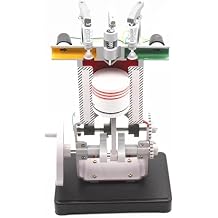
Internal Combustion Engine Model Engine Small Fuel Engine Diesel Engine Model Physics Instrument Diesel Engine Model Working Principle
商品#:
112554979
TWD 1950
Price Details
Excluding Shipping & Custom charges ( Shipping and custom charges will be calculated on checkout )
*All items will import from 美國
0 ratings
撰寫評論
有存貨
 從USA商店匯入
立即訂購並活動它 週五, 七月 24
Secured transaction
Ubuy works hard to protect your security and privacy. Our advanced payment security system ensures confidentiality by encrypting your information during transmission using AES (Advanced Encryption Standards) and SSL (Secure Socket Layer) protocols. Your payment details are 100% secure as we do not share your payment details with third party sellers.
Our Top Logistics Partners


It can clearly explain the basic working principle of four-stroke single-cylinder gasoline engine and the main structure of common single-cylinder gasoline engine.

Fast
Shipping

Free
Return*

Secure Packaging

100% Original Products

PCI DSS Compliance

ISO 27001 Certified


產品詳情
| Item Weight | 3.5 lbs (1.59 kg) |
危險品
為避免危險品清關過程的延誤,貨物應在我們的倉庫設施中打開,以檢查危險成分的嚴重程度。 Please see the list of Dangerous goods here.
產品描述
Internal Combustion Engine Model Engine Small Fuel Engine Diesel Engine Model Physics Instrument Diesel Engine Model Working Principle
有疑問? 和我們聊天
客戶問答
-
問題:
What is the working principle of the Internal Combustion Engine Model?
Answer: The Internal Combustion Engine Model operates on the principles of diesel fuel combustion to create mechanical energy. In this model, air is compressed within a cylinder, raising its temperature significantly. When diesel fuel is injected, it ignites due to the high pressure and temperature, resulting in a rapid expansion that pushes the piston. This process simulates the workings of actual diesel engines, making it an excellent educational tool to demonstrate concepts such as thermodynamics and mechanics. -
問題:
What educational purposes does the Diesel Engine Model serve?
Answer: The Diesel Engine Model is primarily designed for educational use in physics and engineering studies. It helps students visualize complex concepts such as fuel combustion, energy transformation, and engine mechanics. By utilizing this model, learners can engage in hands-on experiments that allow them to observe the real-time effects of changing variables, like fuel type or compression ratio, thus reinforcing their understanding of internal combustion principles. -
問題:
Is the Internal Combustion Engine Model suitable for beginners?
Answer: Yes, the Internal Combustion Engine Model is suitable for beginners as it simplifies the core concepts of engine mechanics. The model features clear labels and allows for easy assembly, making it accessible for novices. Whether you're an engineering student or an enthusiast interested in car mechanics, this model serves as a comprehensive introduction, providing foundational knowledge about internal combustion systems and their components. -
問題:
What materials are used in the construction of the Diesel Engine Model?
Answer: The Diesel Engine Model is typically constructed from durable materials such as metal and high-quality plastics to ensure longevity and effective demonstration of mechanical functions. Metal components contribute to the sturdiness and realistic operation of the engine parts, while plastics are often used for encasing and detailing. This combination provides an engaging hands-on experience while ensuring that the model can withstand repeated use in educational settings. -
問題:
Can this model be integrated into classroom lessons?
Answer: Absolutely! The Internal Combustion Engine Model can seamlessly integrate into physics and engineering curricula. Teachers can use this model to demonstrate key concepts during lectures, engage students in laboratory experiments, and facilitate discussions about real-world applications of diesel engines. For instance, students can compare the workings of this model with electric engines, setting the stage for broader discussions on sustainability and technology. -
問題:
What are the key components of an Internal Combustion Engine Model?
Answer: Key components of the Internal Combustion Engine Model include the cylinder, piston, crankshaft, fuel injector, and ignition system. Each part plays a crucial role in the engine's functionality. The cylinder houses the piston, which moves up and down as combustion occurs. The fuel injector is responsible for introducing diesel fuel into the combustion chamber. Understanding these components is vital for grasping how diesel engines operate and their various applications in industries. -
問題:
Is the Diesel Engine Model designed for both display and educational use?
Answer: Yes, the Diesel Engine Model is designed for both display and educational purposes. Its detailed construction makes it an attractive display piece for enthusiasts, while its operational functionality enhances learning experiences in classrooms. Whether showcased in a science fair or used as a teaching aid, this model provides insight into the mechanics and principles of internal combustion, captivating both learners and audiences alike. -
問題:
How does the model contribute to understanding energy transformation?
Answer: The Diesel Engine Model demonstrates energy transformation from chemical energy in fuel to mechanical energy. As diesel combusts, it releases heat, causing gas expansion that drives the piston. This transformation showcases key physics principles, allowing students to analyze energy conversion efficiency in engines. By observing each cycle, learners can explore concepts such as thermodynamics and energy loss, gaining a full understanding of practical applications in automotive engineering. -
問題:
Where can I find the best Internal Combustion Engine Model available?
Answer: You can purchase the Internal Combustion Engine Model at Ubuy. Ubuy offers a variety of educational physics instruments, including small fuel engine models, making it a great choice for enthusiasts and educators alike. Their platform provides ample product details and specifications, ensuring that you select the model that best fits your learning or teaching needs. It's an excellent resource for anyone interested in hands-on engine technology. -
問題:
What types of fuel can be used in the Diesel Engine Model?
Answer: The Diesel Engine Model is designed specifically to operate on diesel fuel, but for experiments, alternatives like biodiesel or synthetic diesel may also be used. These fuels replicate the combustion process essential for the model’s operation while allowing for exploration of fuel efficiency and emissions. By using various types of fuel, students can conduct practical experiments that illustrate concepts related to fuel properties, energy output, and environmental impact.
FYYKXWD Measurement Kits Editorial Review
未找到編輯評論
Customer Reviews & Ratings
1 客戶評價
-
5 星
100%
-
4 星
0%
-
3 星
0%
-
2 星
0%
-
1 星
0%
評論這個產品
和其他客戶分享您的想法
Product Price History
重要資訊
- 限制:對於國際運輸的產品,請注意任何製造商保修可能無效;製造商服務選項可能不可用;產品手冊、說明和安全警告可能不是目的地國家的語言;產品(及隨附材料)的設計可能不符合目的地國家的標準、規範和標籤要求;並且產品可能不符合目的地國家的電壓和其他電氣標準(如果適用,需要使用適配器或轉換器)。收件人有責任確保產品可以合法進口到目的地國家。當從Ubuy或其關聯公司訂購時,收件人是記錄在案的進口人,並且必須遵守目的地國家的所有法律和法規。
- 由於Ubuy是一個全球搜索引擎,因此並非Ubuy上列出的所有產品都在出售。產品受出口/貿易法規的約束。
TWD 1950
立即訂購並活動它 週五, 七月 24
This item is not restrict in my country.(Please click on above link if this item is not restrict in your country, So our team will review and allow.)
QTY:
Secured transaction
Ubuy works hard to protect your security and privacy. Our advanced payment security system ensures confidentiality by encrypting your information during transmission using AES (Advanced Encryption Standards) and SSL (Secure Socket Layer) protocols. Your payment details are 100% secure as we do not share your payment details with third party sellers.
Our Top Logistics Partners
Fastest cross-border delivery
特色和優勢
- Ideal for middle school physics education.
- Demonstrates four-stroke single-cylinder gasoline engine principles.
- Showcases the main structure of gasoline engines.
- Equipped with a light display for enhanced learning.
- Power supply requirement is only 1.5 volts.
- Intuitive explanation of intake, exhaust, and ignition actions.