- 主頁 /
- 書籍 /
- 電腦和技術 /
- 電腦科學 /
- AI & Machine Learning /
- Neural Networks /
- Machine Learning Engineering with Python: Man...
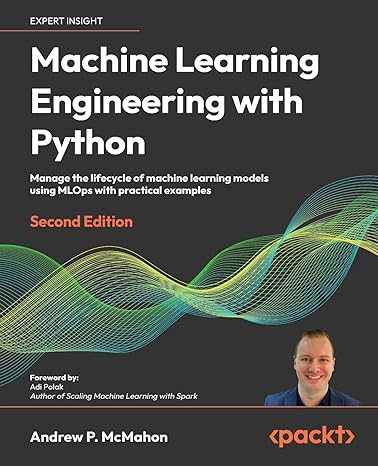
Machine Learning Engineering with Python: Manage the lifecycle of machine learning models using MLOps with practical examples 2nd Edition
TWD 2097
Price Details
Excluding Shipping & Custom charges ( Shipping and custom charges will be calculated on checkout )
*All items will import from 美國
QTY:
Ubuy works hard to protect your security and privacy. Our advanced payment security system ensures confidentiality by encrypting your information during transmission using AES (Advanced Encryption Standards) and SSL (Secure Socket Layer) protocols. Your payment details are 100% secure as we do not share your payment details with third party sellers.
Transform your machine learning projects into successful deployments with this practical guide on how to build and scale solutions that solve real-world problems
Fast
Shipping
Free
Return*
Secure Packaging
100% Original Products
PCI DSS Compliance
ISO 27001 Certified

What Stands Out
產品詳情
| Item Weight | 1 lbs (450 grams) |
Who Should Buy?
-
Aspiring Data Scientists
Those entering the field will benefit from structured learning and practical examples to build foundational skills.
-
ML Engineers
Current professionals aiming to enhance their MLOps knowledge and workflows will find valuable insights and techniques.
-
Project Managers
Individuals overseeing ML projects will gain an understanding of model lifecycle and MLOps integration for better management.
-
Complete Beginners
Readers with no prior knowledge of machine learning may find the book's concepts too advanced or confusing.
-
Casual Readers
Those looking for a light overview of machine learning won't find this detailed, technical approach suitable.
-
Experienced Researchers
Professionals conducting advanced research may not find new insights or techniques to benefit their specialized knowledge.
產品描述
Machine Learning Engineering with Python: Manage the lifecycle of machine learning models using MLOps with practical examples 2nd Edition
客戶問答
-
問題:
What is 'Machine Learning Engineering with Python' about?
Answer: The book 'Machine Learning Engineering with Python' focuses on effectively managing the lifecycle of machine learning models, particularly through the lens of MLOps. It provides a comprehensive guide on deploying, maintaining, and optimizing machine learning systems. Practical examples throughout the book help bridge the gap between theory and application. Whether you are a beginner or experienced in ML, the content is structured to enhance your understanding of model production and maintenance, making it an essential resource for anyone looking to implement ML solutions in real-world scenarios. -
問題:
Who is the target audience for this book?
Answer: This book targets machine learning practitioners, data scientists, and software engineers looking to deepen their understanding of MLOps. It caters to both beginners and those with some experience in machine learning, making it a valuable resource for professionals seeking to streamline their model deployment and management processes. The content is designed to be practical, ensuring that readers can directly apply the concepts in their organizations or personal projects, facilitating a smooth transition from development to production. -
問題:
What practical examples does this book provide?
Answer: The book offers a variety of practical examples that illustrate key concepts in managing machine learning models. These examples range from end-to-end project walkthroughs to real-case scenarios showcasing how to implement MLOps practices efficiently. Readers can expect to find step-by-step guides for deploying models, monitoring performance, and iterating designs based on real-world data. This hands-on approach not only makes the complex themes of ML more digestible but also prepares readers for the challenges they may encounter in their projects. -
問題:
How does this book differ from other machine learning books?
Answer: Unlike many traditional machine learning books that focus heavily on algorithms and theory, 'Machine Learning Engineering with Python' emphasizes the lifecycle and operational aspects of ML models. This focus on MLOps as a discipline equips readers with a framework for deploying and managing their models effectively. The real-world examples and practical advice provided make it unique in helping professionals understand not just how to build models, but how to maintain and optimize them in production environments, setting it apart from more theoretical texts. -
問題:
What are the key topics covered in this edition?
Answer: The 2nd edition covers an extensive range of topics crucial for machine learning engineering, including data preprocessing, model deployment, performance monitoring, and continuous integration & delivery in ML workflows. It also addresses the evolving landscape of tools and technologies in MLOps, such as cloud services and automated pipelines. Each topic is designed to provide readers with a thorough understanding of how to take ML models from development to deployment while ensuring scalability and reliability, making it a timely resource in the fast-paced field of AI. -
問題:
What are the prerequisites for reading this book?
Answer: While the book is accessible to readers with basic Python programming skills, having a foundational understanding of machine learning concepts and practices is beneficial. Familiarity with libraries like Pandas, NumPy, and Scikit-learn will enhance comprehension. Those who have worked on machine learning projects will find it easier to grasp the operational aspects and practical applications discussed. This makes it ideal for professionals wanting to improve their skill set or students aiming to enter the field of machine learning engineering. -
問題:
How can I implement MLOps practices described in the book?
Answer: To implement the MLOps practices described in the book, start by setting up an agile and collaborative environment in your organization. Use the provided frameworks and roadmaps to develop a structured pipeline for model training, deployment, and monitoring. The practical examples serve as templates to guide your implementations. For instance, you can begin with small-scale projects, gradually applying the principles of version control and automated testing as you gain confidence. This approach not only leads to improved model performance but also enhances team collaboration. -
問題:
Is there any online content that accompanies the book?
Answer: Yes, the authors often provide supplementary materials and resources on their website or through online platforms associated with the book. These may include access to code examples, datasets for practice, and updates relevant to the latest trends in machine learning and MLOps. Engaging with the online content can enrich your learning experience by offering interactive elements that reinforce the concepts discussed in the book, making it easier to apply them to real-world situations. -
問題:
What are some common challenges faced in machine learning engineering?
Answer: Common challenges in machine learning engineering include model deployment complexities, data quality issues, and maintaining model performance over time. Other obstacles often involve integration with existing systems and managing resource allocation efficiently. The book addresses these challenges by providing strategies to mitigate them, such as implementing robust data handling practices and establishing effective monitoring systems. By following the methodologies described in the text, readers can better navigate these challenges and improve the resilience and reliability of their ML systems. -
問題:
Where can I buy 'Machine Learning Engineering with Python'?
Answer: You can purchase 'Machine Learning Engineering with Python: Manage the lifecycle of machine learning models using MLOps with practical examples 2nd Edition' on Ubuy. Ubuy offers a reliable platform for acquiring the book, ensuring that you get your copy quickly and efficiently. Whether you're looking to improve your skills in machine learning engineering or seeking practical insights into MLOps, this edition is a great addition to your library.
Neural Networks Editorial Review
Customer Reviews & Ratings
-
5 星
0%
-
4 星
100%
-
3 星
0%
-
2 星
0%
-
1 星
0%
評論這個產品
和其他客戶分享您的想法
Product Price History
重要資訊
- 限制:對於國際運輸的產品,請注意任何製造商保修可能無效;製造商服務選項可能不可用;產品手冊、說明和安全警告可能不是目的地國家的語言;產品(及隨附材料)的設計可能不符合目的地國家的標準、規範和標籤要求;並且產品可能不符合目的地國家的電壓和其他電氣標準(如果適用,需要使用適配器或轉換器)。收件人有責任確保產品可以合法進口到目的地國家。當從Ubuy或其關聯公司訂購時,收件人是記錄在案的進口人,並且必須遵守目的地國家的所有法律和法規。
- 由於Ubuy是一個全球搜索引擎,因此並非Ubuy上列出的所有產品都在出售。產品受出口/貿易法規的約束。
TWD 2097
立即訂購並活動它 週二, 七月 07
This item is not restrict in my country.(Please click on above link if this item is not restrict in your country, So our team will review and allow.)
QTY:
Ubuy works hard to protect your security and privacy. Our advanced payment security system ensures confidentiality by encrypting your information during transmission using AES (Advanced Encryption Standards) and SSL (Secure Socket Layer) protocols. Your payment details are 100% secure as we do not share your payment details with third party sellers.
特色和優勢
- Learn practical problem-solving skills
- Deep dive into ML fundamentals
- Explore best practices for ML engineering
- Automate training and deployment processes
- Build wrapper libraries for encapsulating ML logic
- Test yourself through real-world scenarios